

Bee populations are in sharp decline, yet public tools for participation are limited. Bee Mapper bridges the gap.

Benchmarking existing apps showed gaps in interactivity, gamification and accessibility. Insights that informed Bee Mapper’s unique positioning.
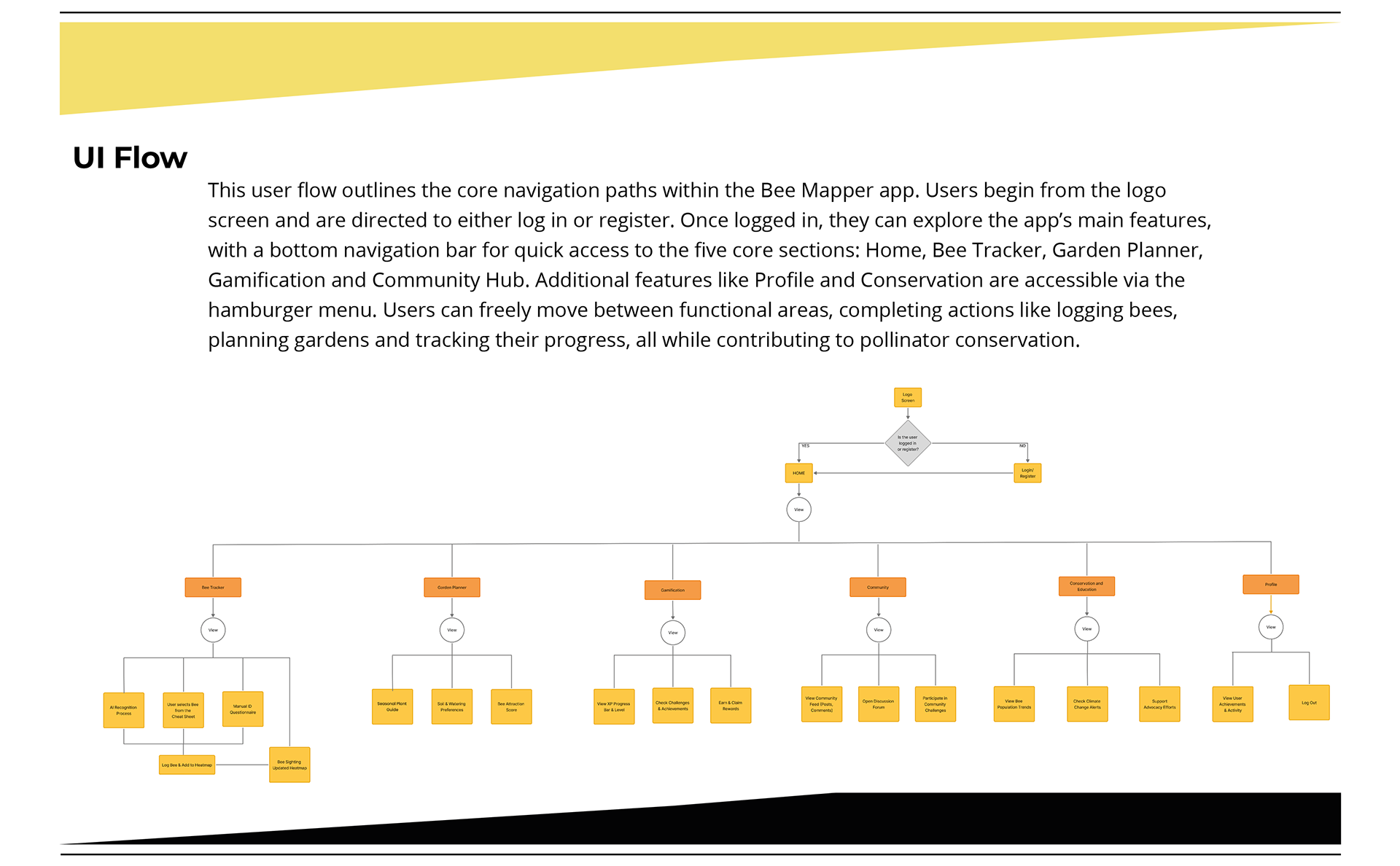
Mapping the user journey, ensuring smooth navigation across bee tracking, garden planning, education and community features.
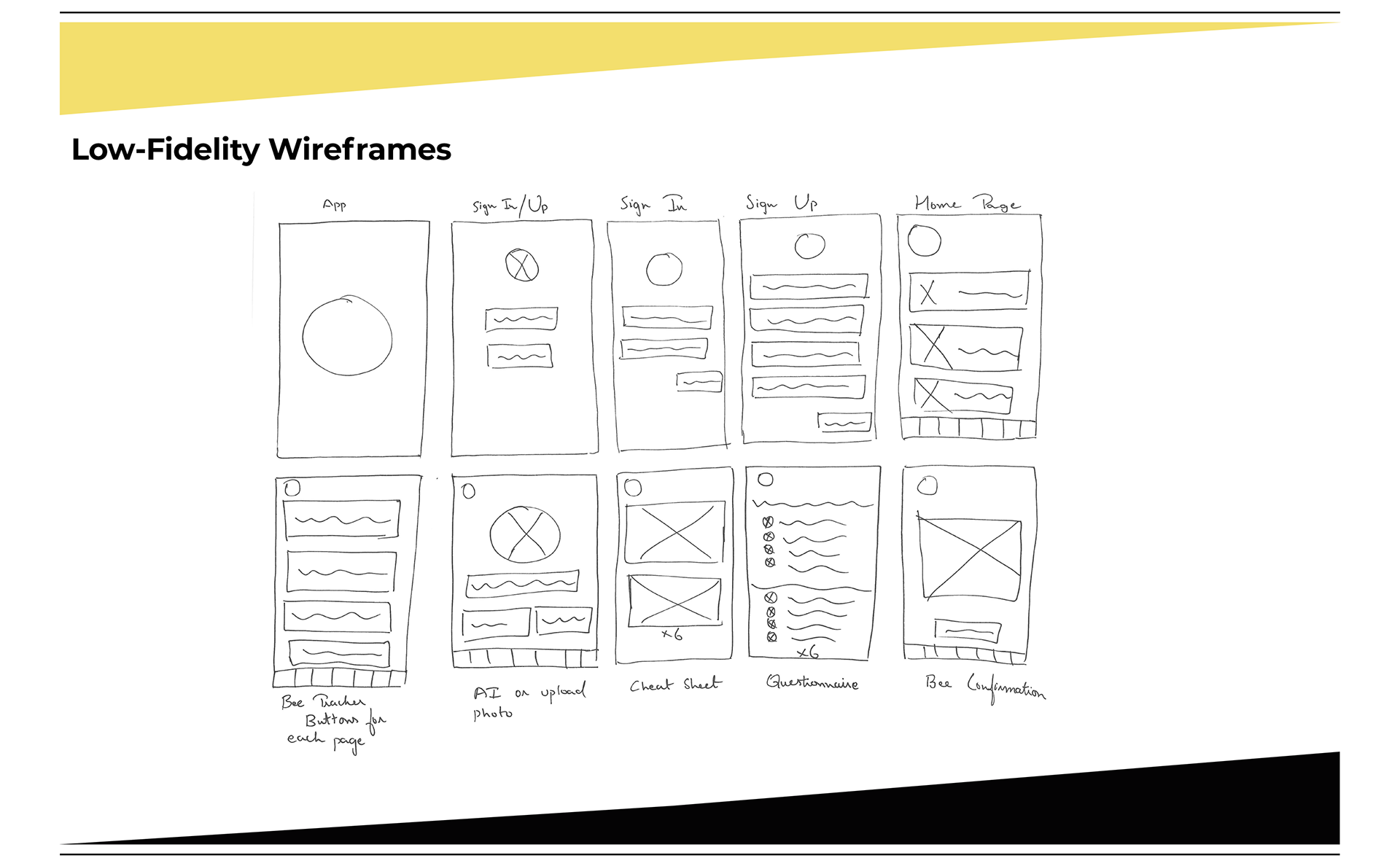
Initial hand-drawn wireframes exploring key app functions such as sign-in, bee logging, questionnaires and navigation. These quick sketches helped visualise the flow before digital prototyping.
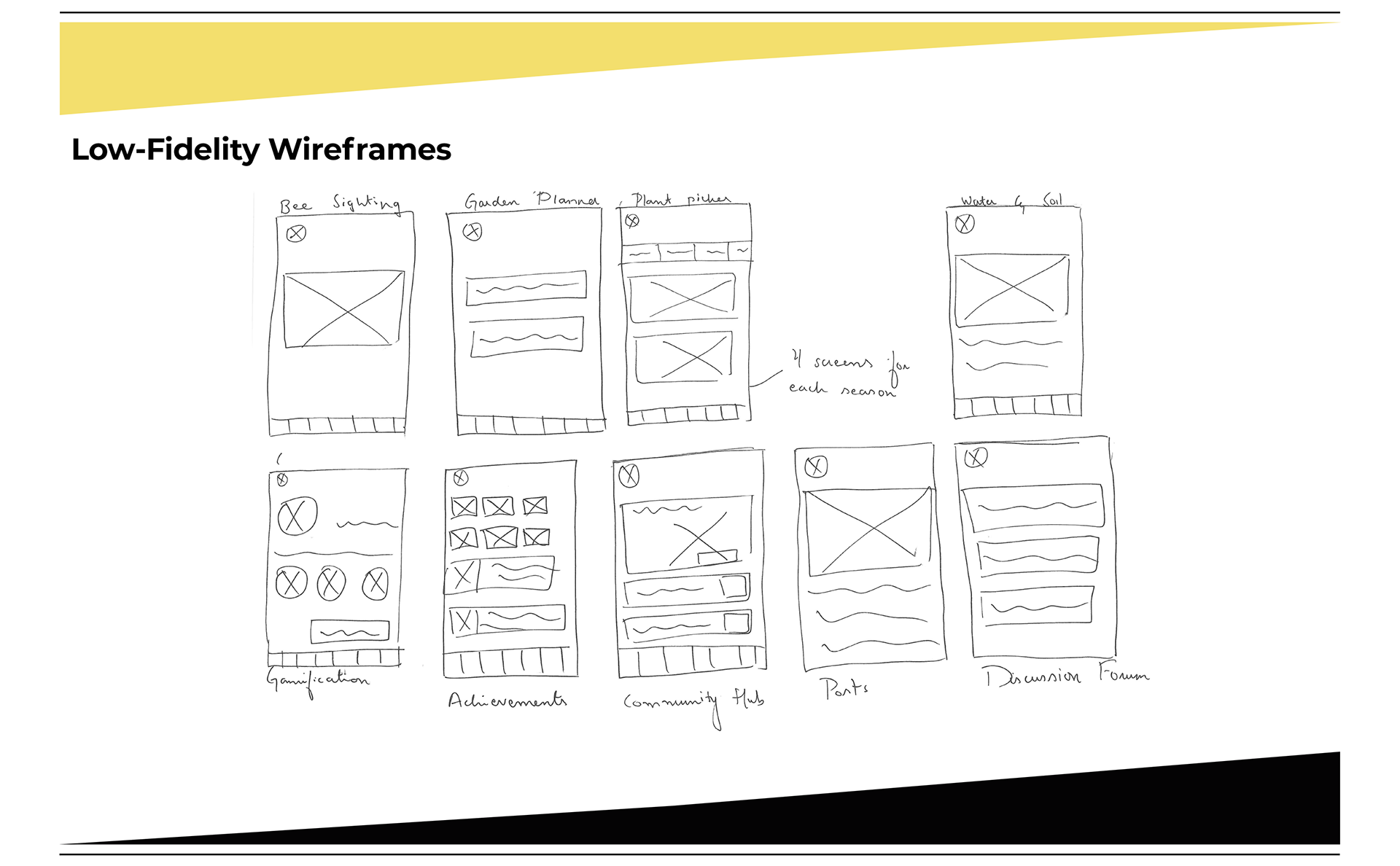
Rough layouts of specific features including garden planner, plant picker, community hub and gamification. These mapped out the content hierarchy and interactive elements.
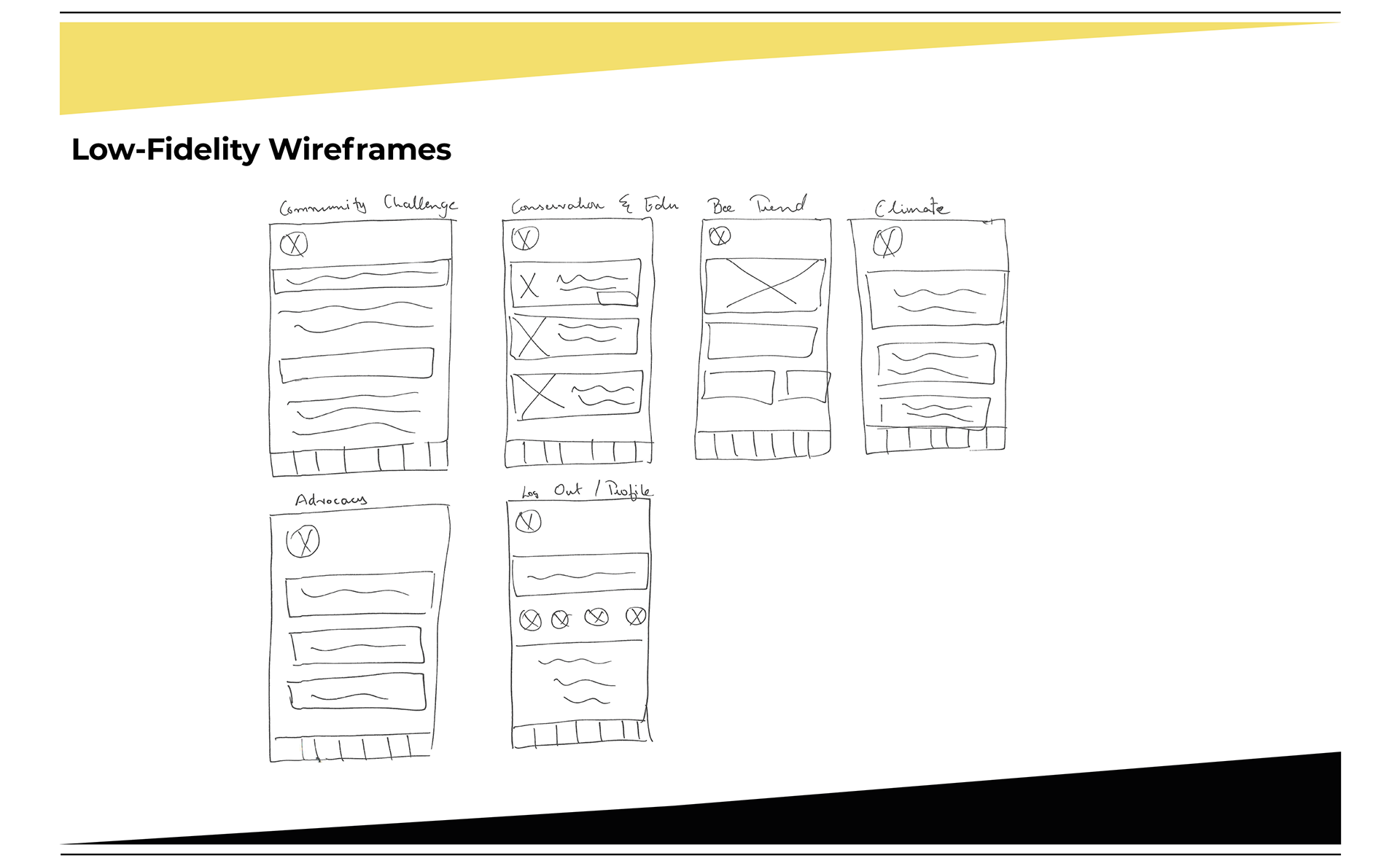
Additional sketches for conservation alerts, bee population trends, community challenges and profile/logout. This stage ensured all app goals were represented before moving into Figma.
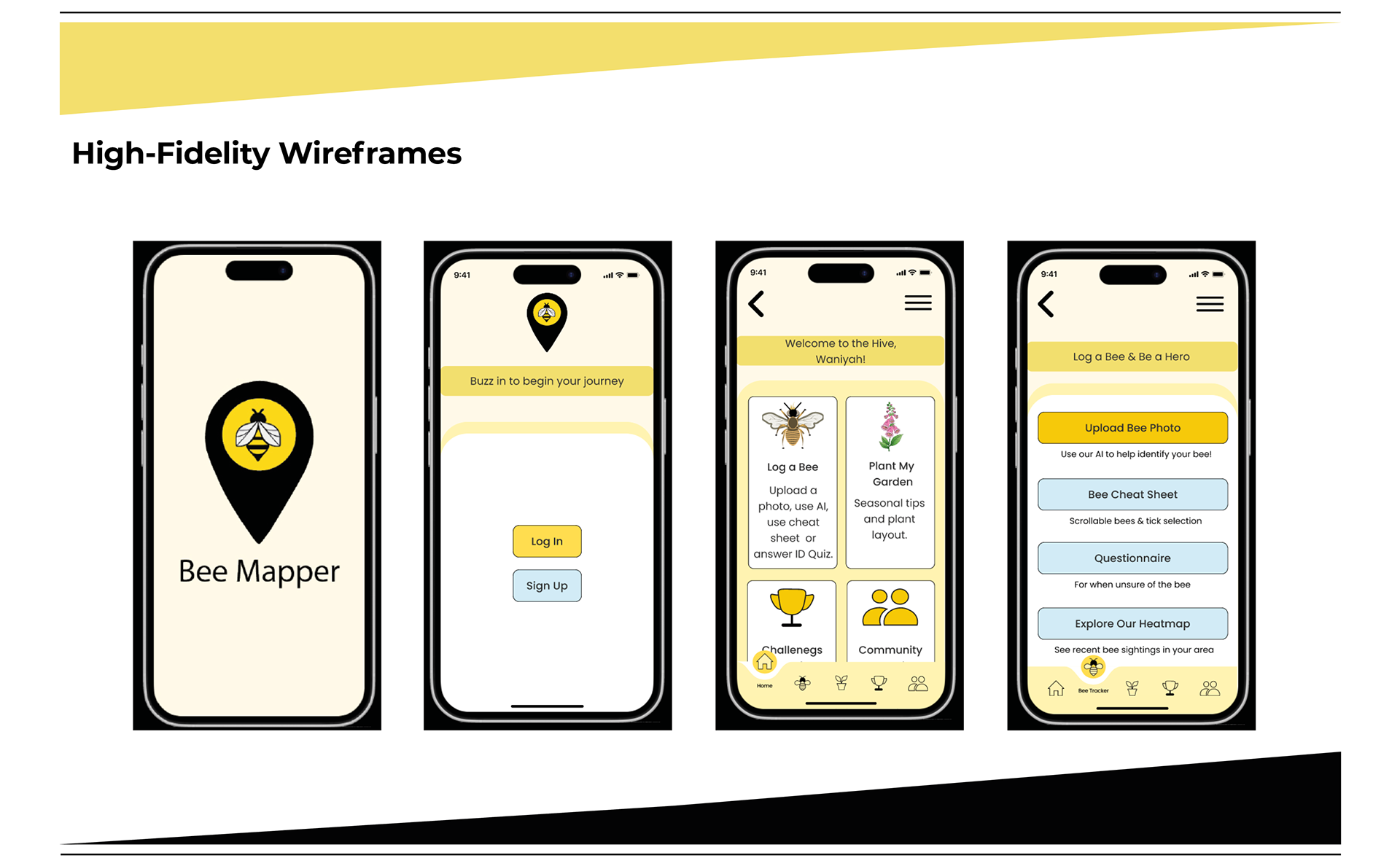
Final app designs in Figma, showing the login process, home dashboard and bee logging options. The clean, friendly UI uses the brand system of icons, colours and illustrations.
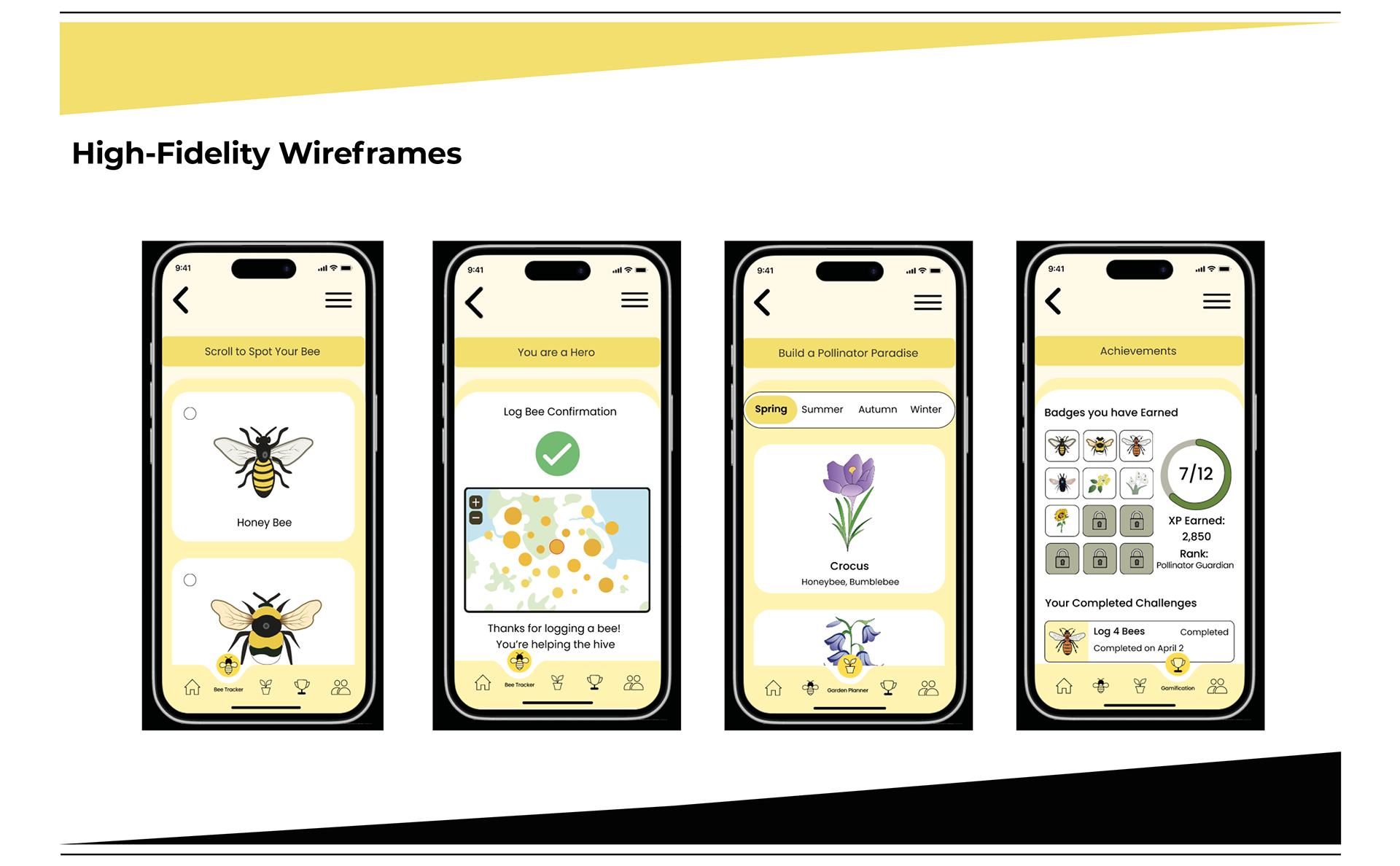
Screens demonstrating bee identification, confirmation, plant guides and gamified achievements. The design transforms conservation into an engaging and rewarding experience.
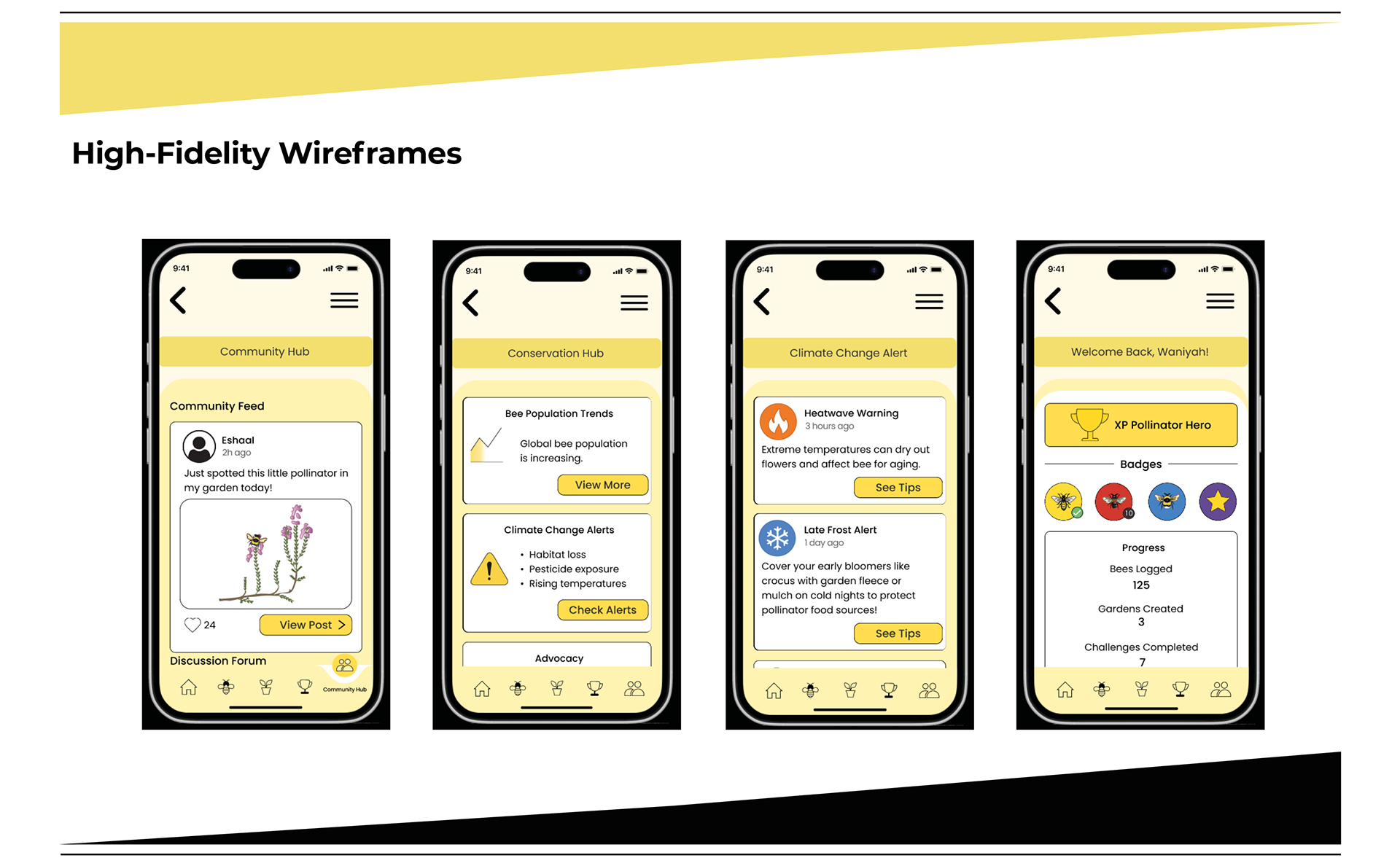
Final app flows for the community hub, conservation hub and climate alerts. These screens highlight how Bee Mapper connects users to real-time data and collective action.
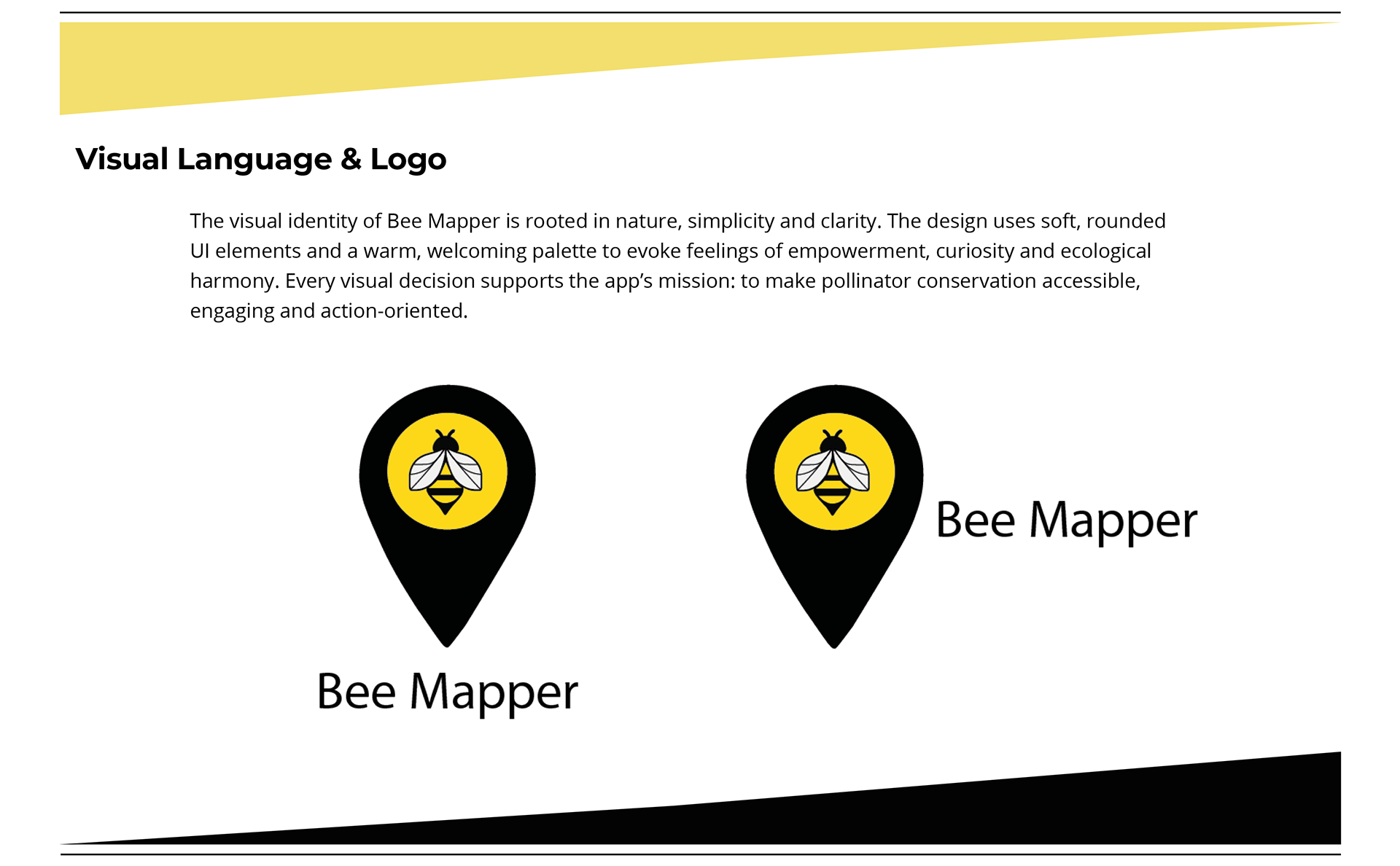
Logo design combining a location pin with a bee, symbolising both mapping and conservation.
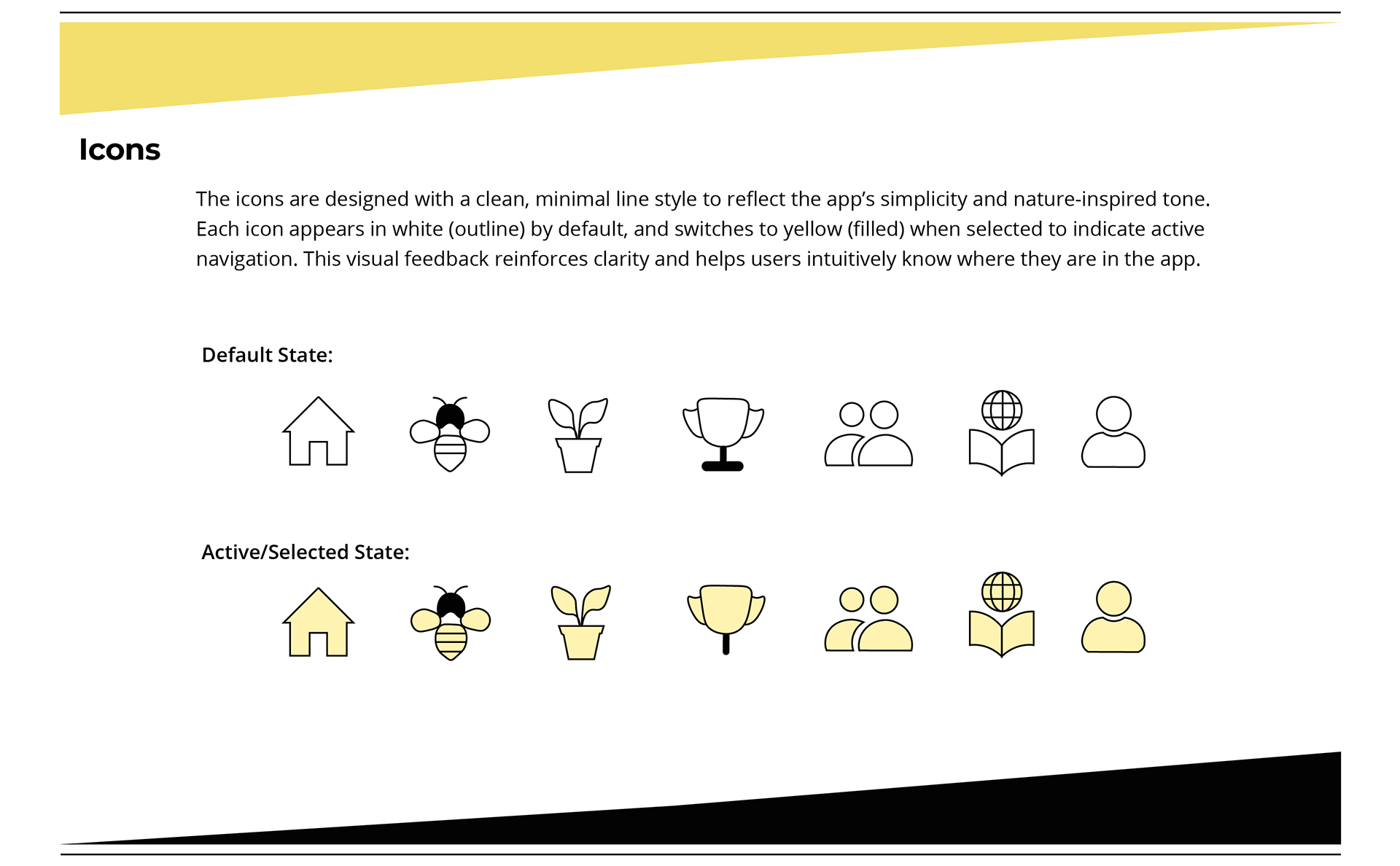
Custom icons ensure simple, recognisable navigation while keeping a friendly, bee-inspired style.
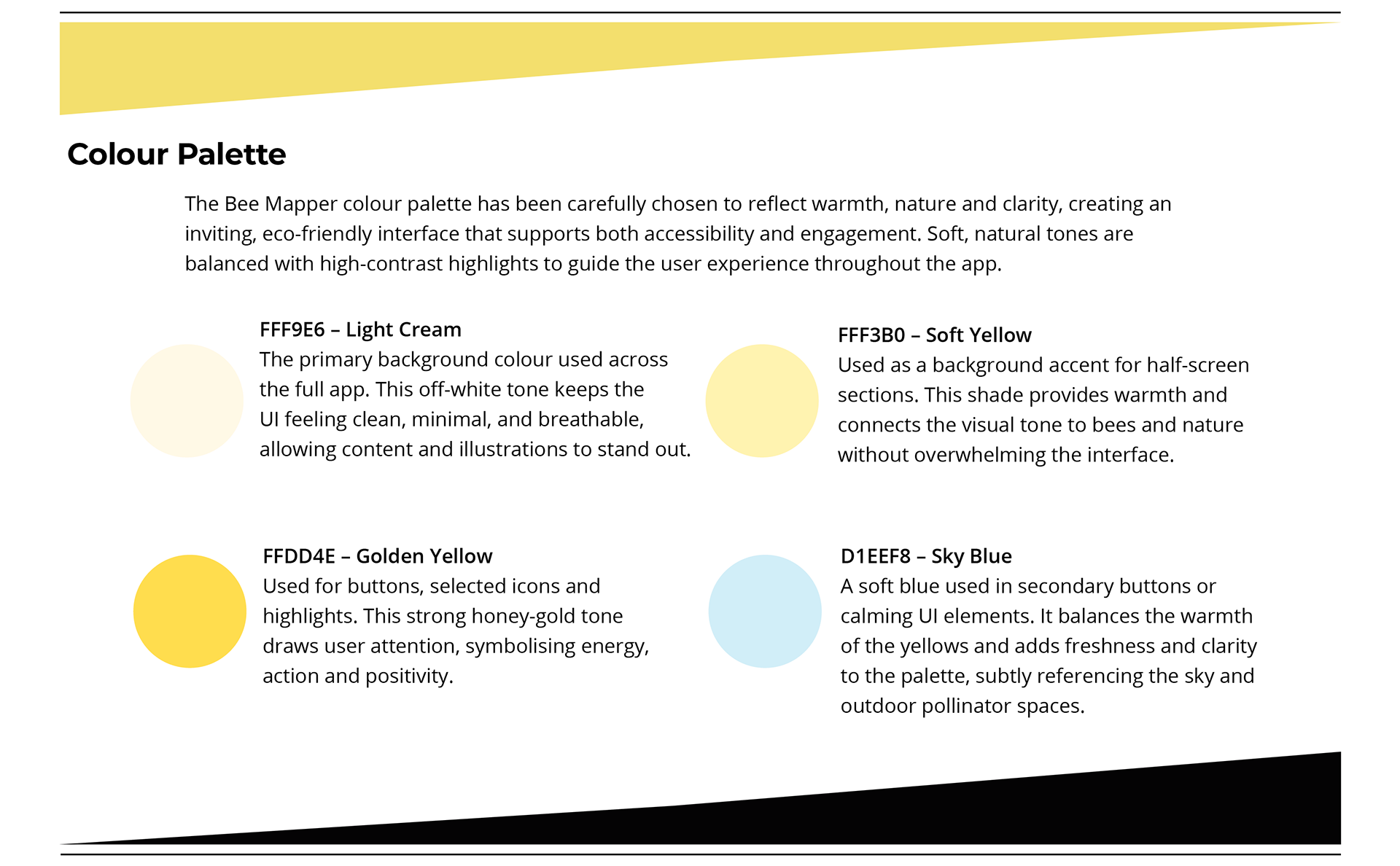
A warm, nature-inspired palette balances optimism yellow with soft neutrals for clarity and a touch of blue for trust.

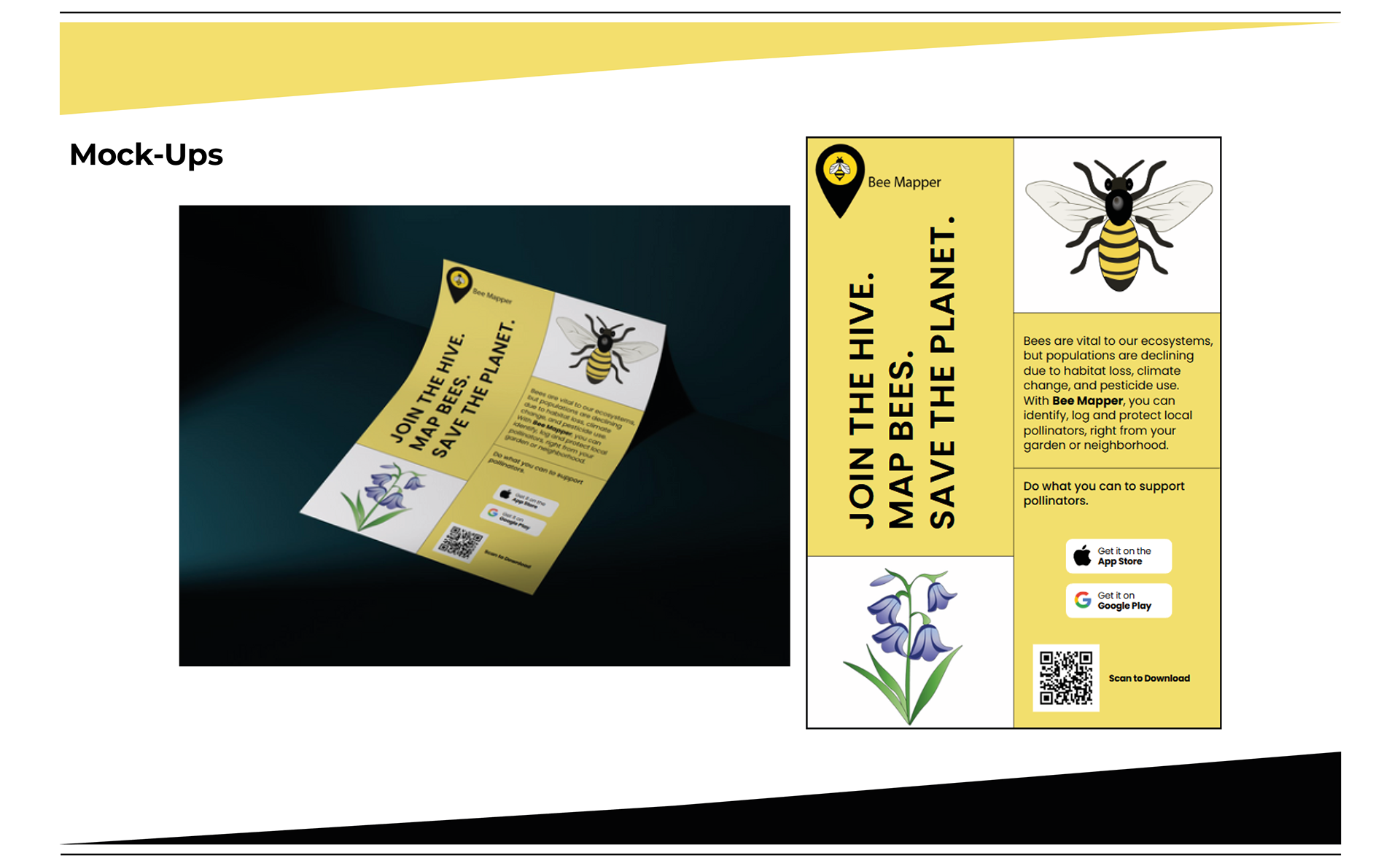
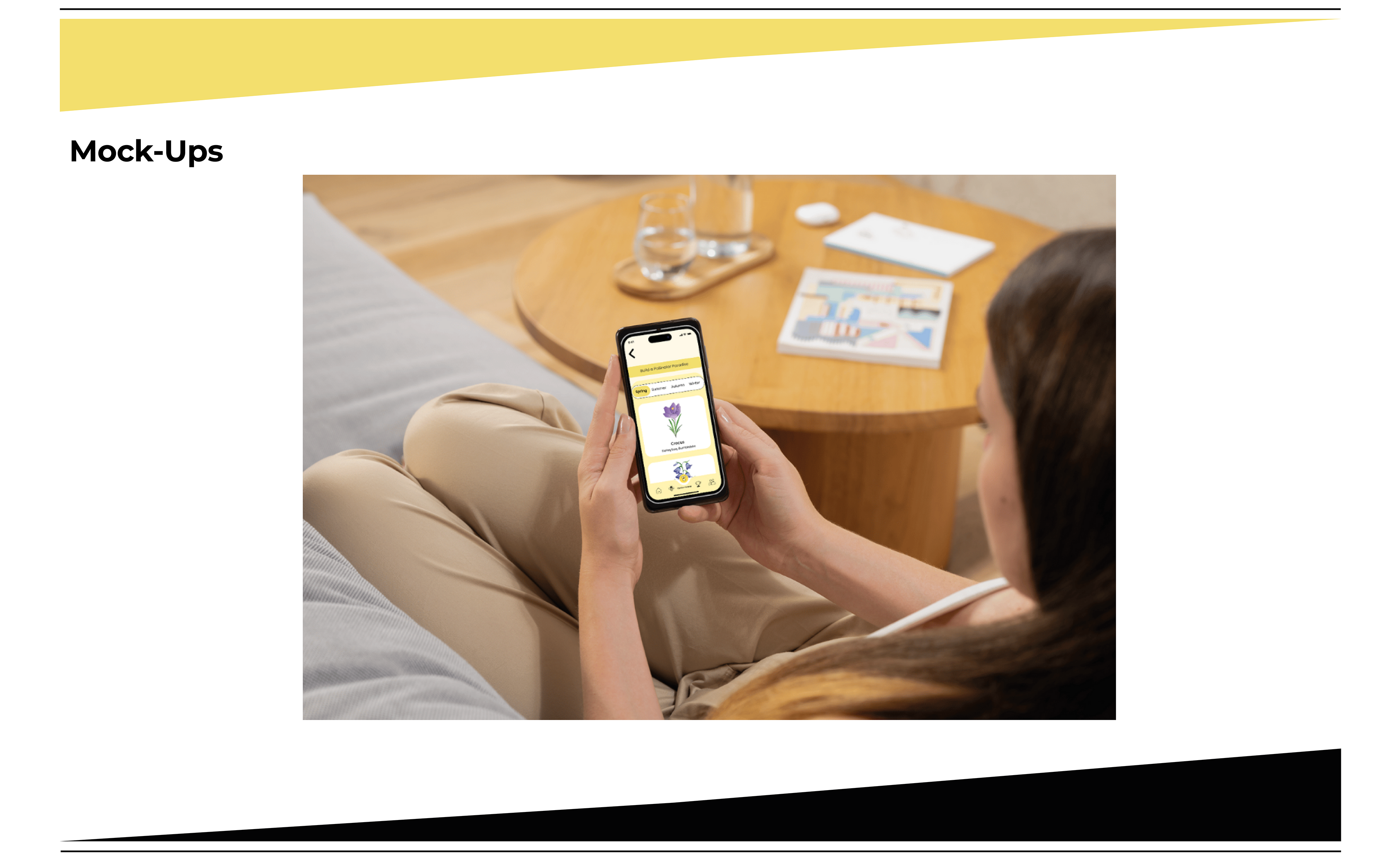
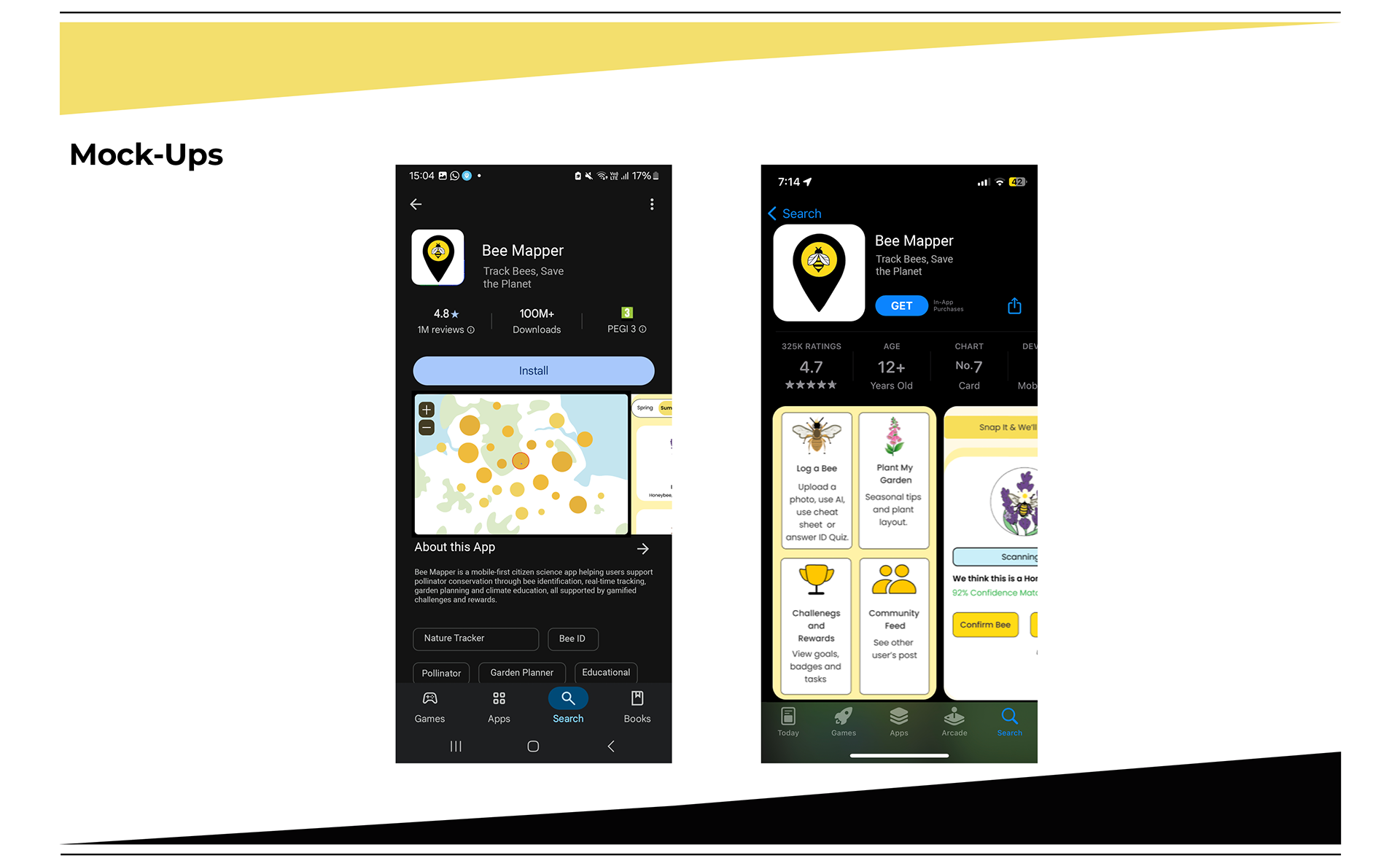
Real-world mockups show how Bee Mapper could be pitched to stakeholders and users.

Bee Mapper demonstrates how design can transform environmental concern into action. The project highlights my skills in UX research, branding, interaction design and prototyping.