
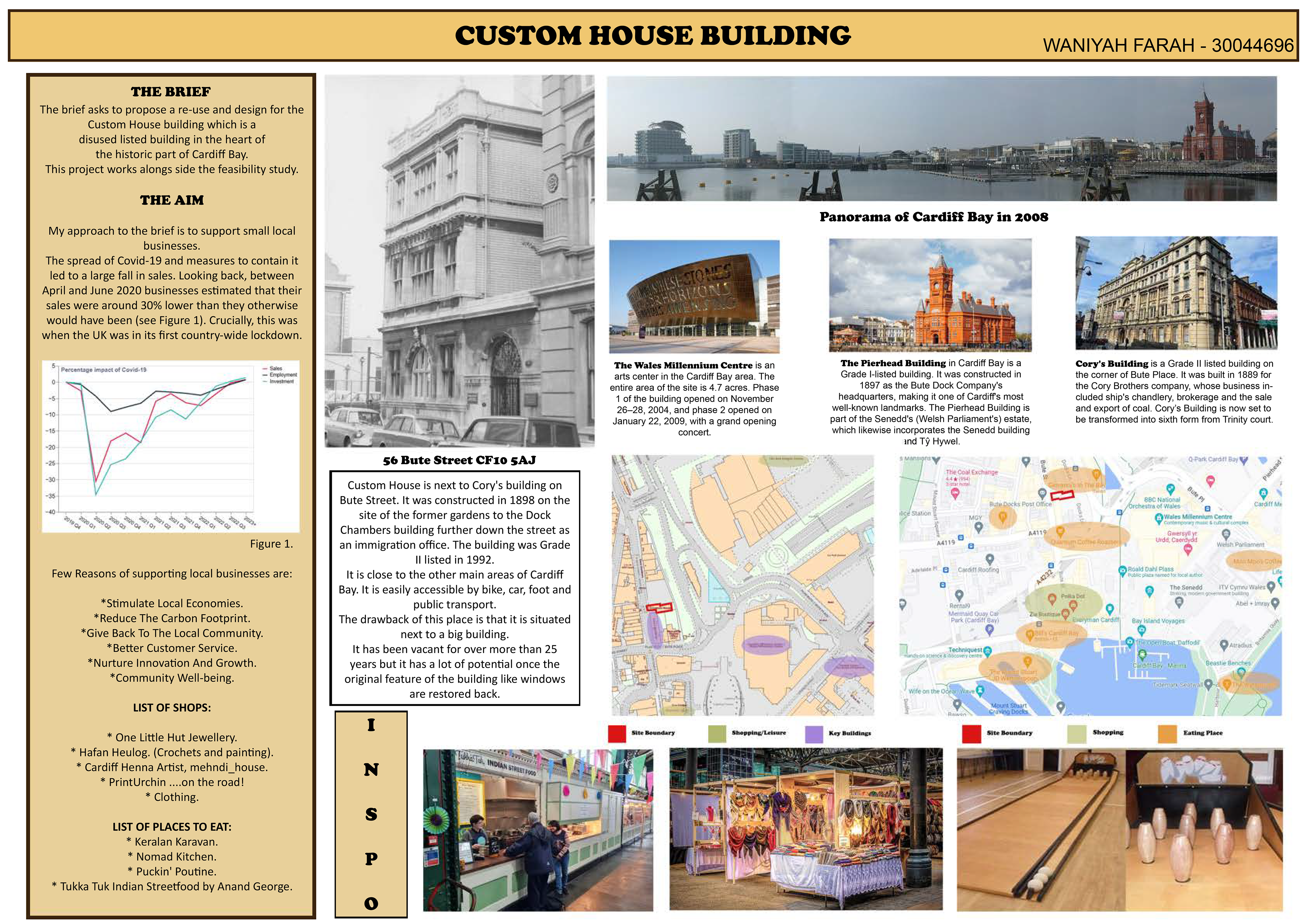
Explored the history, location and context of the Custom House Building through research and mapping. Identified its cultural significance and potential for adaptive reuse.
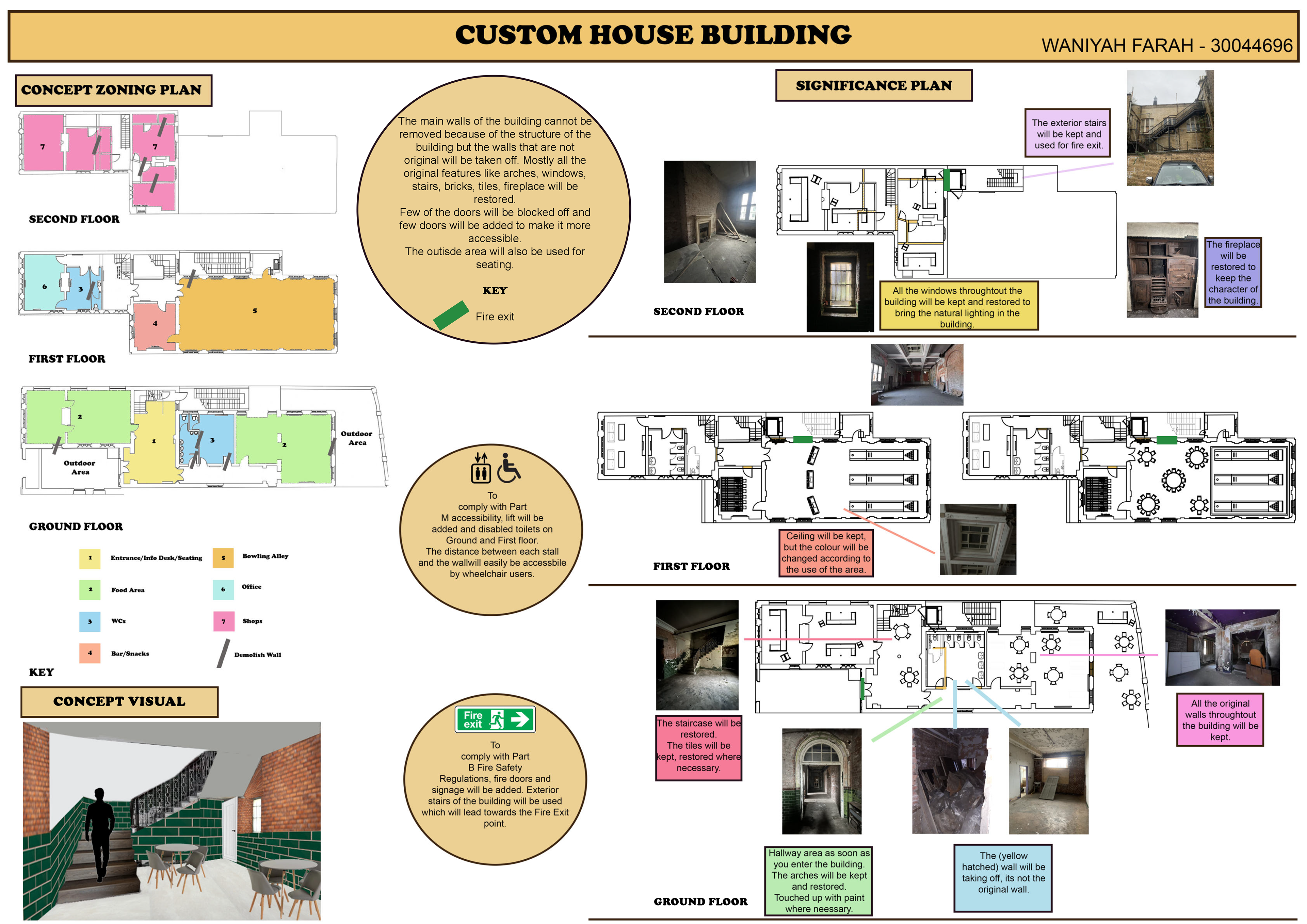
Developed zoning and accessibility strategies to repurpose the building while maintaining key listed features. Highlighted areas of restoration and proposed new uses through detailed layout and compliance diagrams.
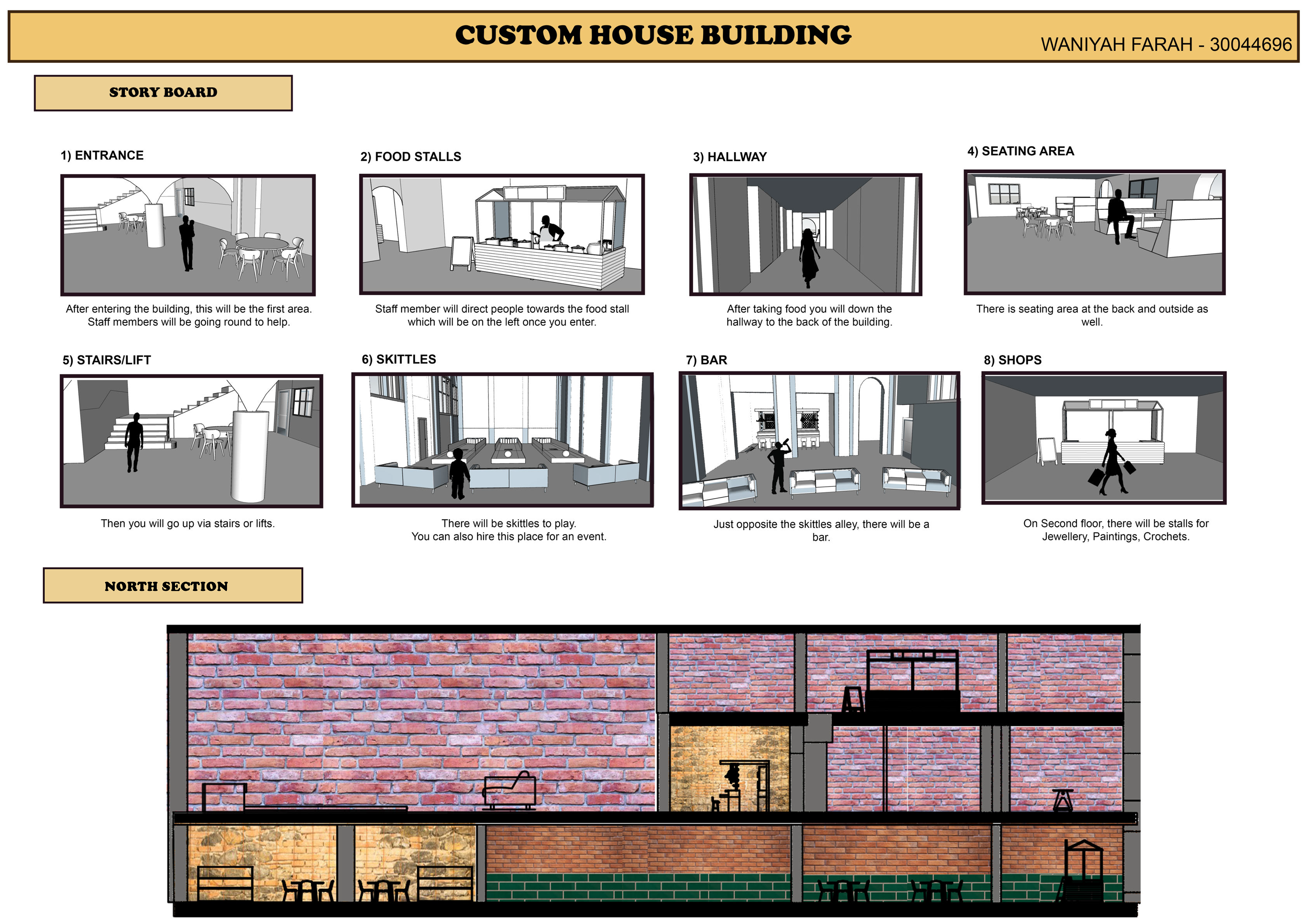
Illustrated the visitor experience through a storyboard sequence and sectional drawing, showing spatial flow from entrance to shops, stalls and leisure areas. Emphasised social interaction and inclusivity.
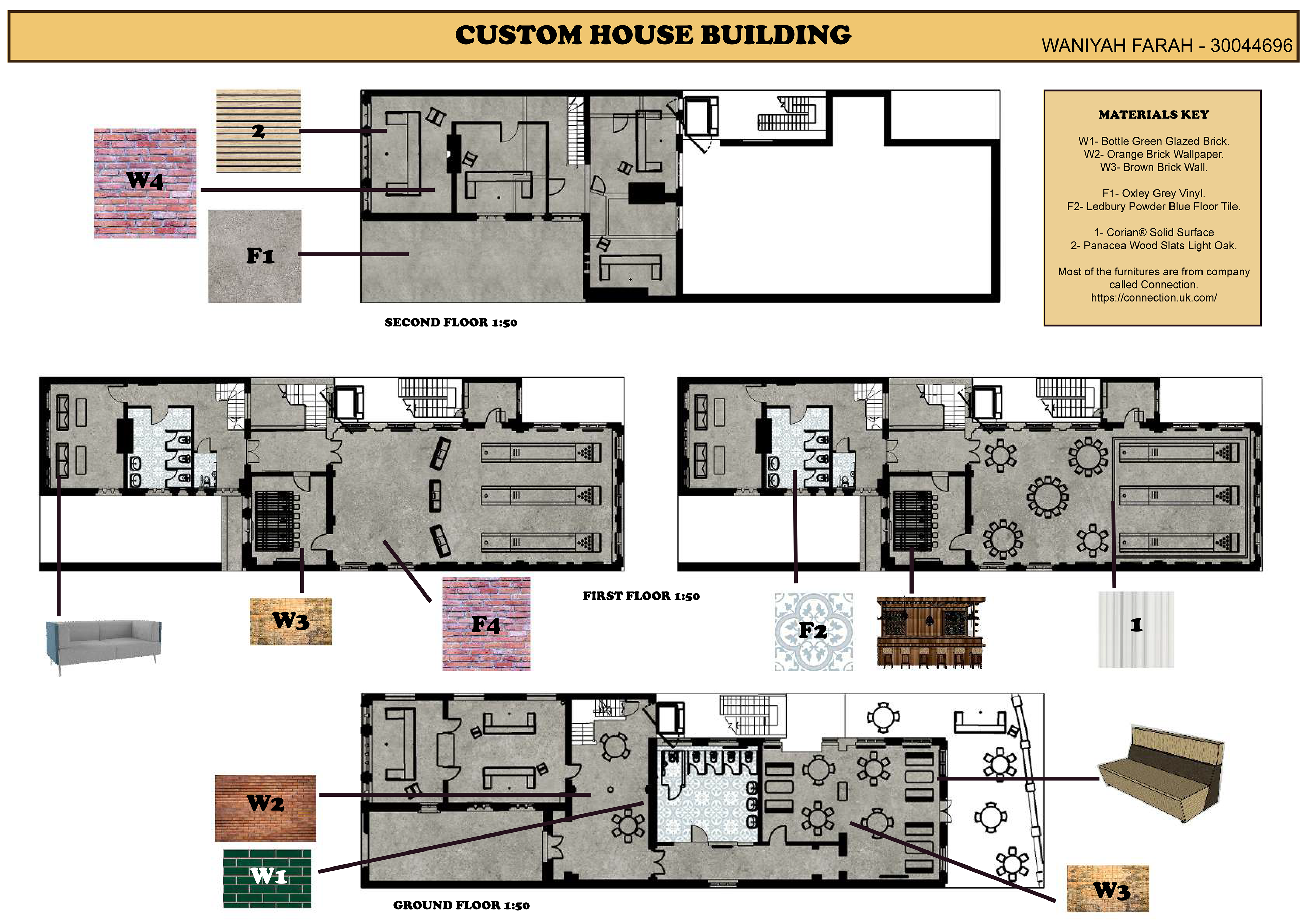
Presented detailed floor plans and materials chosen to complement the building’s original fabric. Combined traditional textures like glazed brick and oak with modern finishes to create a balanced interior identity.
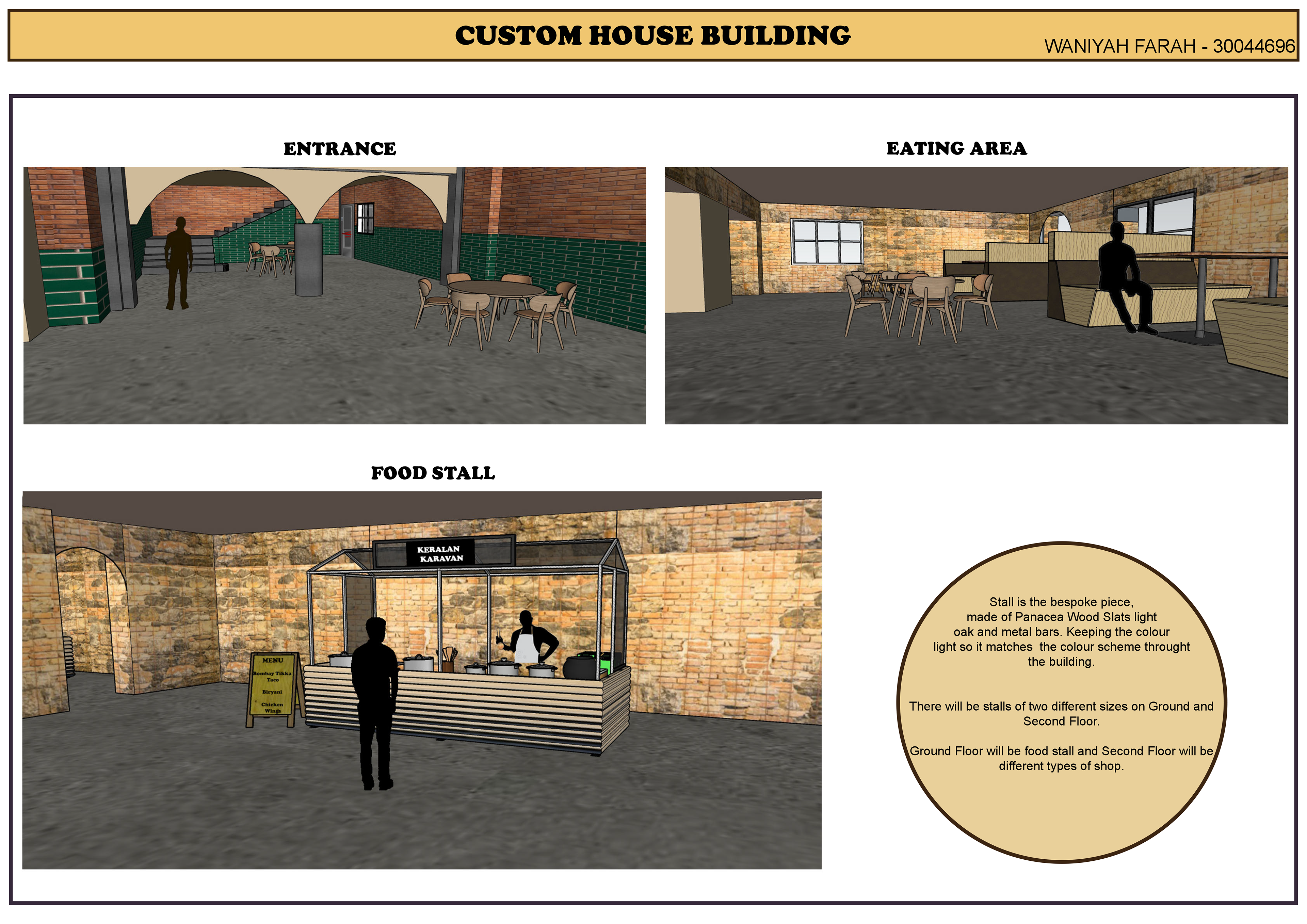
Rendered visualisations showing proposed food stalls and dining areas. The design maintains exposed brick and archways, celebrating the industrial character while providing a welcoming, modern setting.
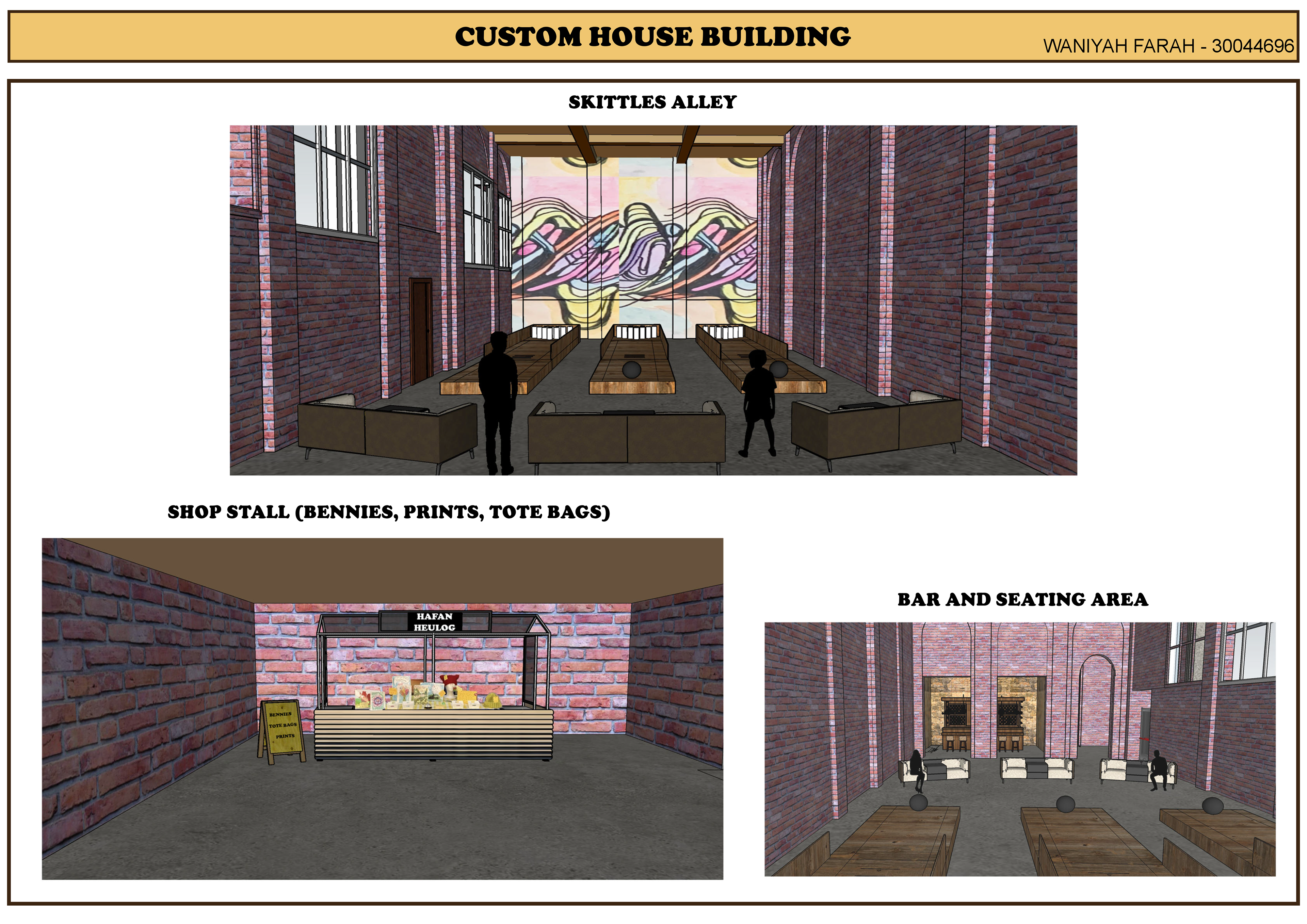
Showcased the upper floor’s skittles alley, shop stalls and bar area. Visuals communicate how heritage, leisure and commerce merge to revitalise the Custom House as a vibrant community destination.